Here's a question that comes up on nearly every listing photography conversation: how many photos do I actually need? The honest answer is more nuanced than most agents realize — and the data has a clear opinion.
Across MLS and Zillow analytics, listings cluster into clear performance bands based on photo count. Understanding those bands is one of the simplest, highest-leverage tweaks an agent can make to their listing marketing.
Below 20 Photos: The Danger Zone
Listings with fewer than 20 photos consistently underperform on every metric — click-through rate, saved listings, showing requests, and days on market. Buyers reading a listing with 12 photos make an immediate (mostly unconscious) judgment: either the home has something to hide, or the agent didn't invest enough in marketing it.
Neither read is good for your seller. If you're under 20 photos, the listing is fighting an uphill battle from the moment it goes live.
20-30 Photos: Functional but Not Compelling
This is the floor of professional listings. You can tell the basic story of the home — every major room, primary exterior angle, key amenities. Buyers won't bounce, but they also won't get pulled in by the depth of the gallery.
Many MLS systems used to cap at 25, which is why this number lingers as a reflex. Those caps are mostly gone now. There's no reason to stop at 25 unless the home is genuinely small.
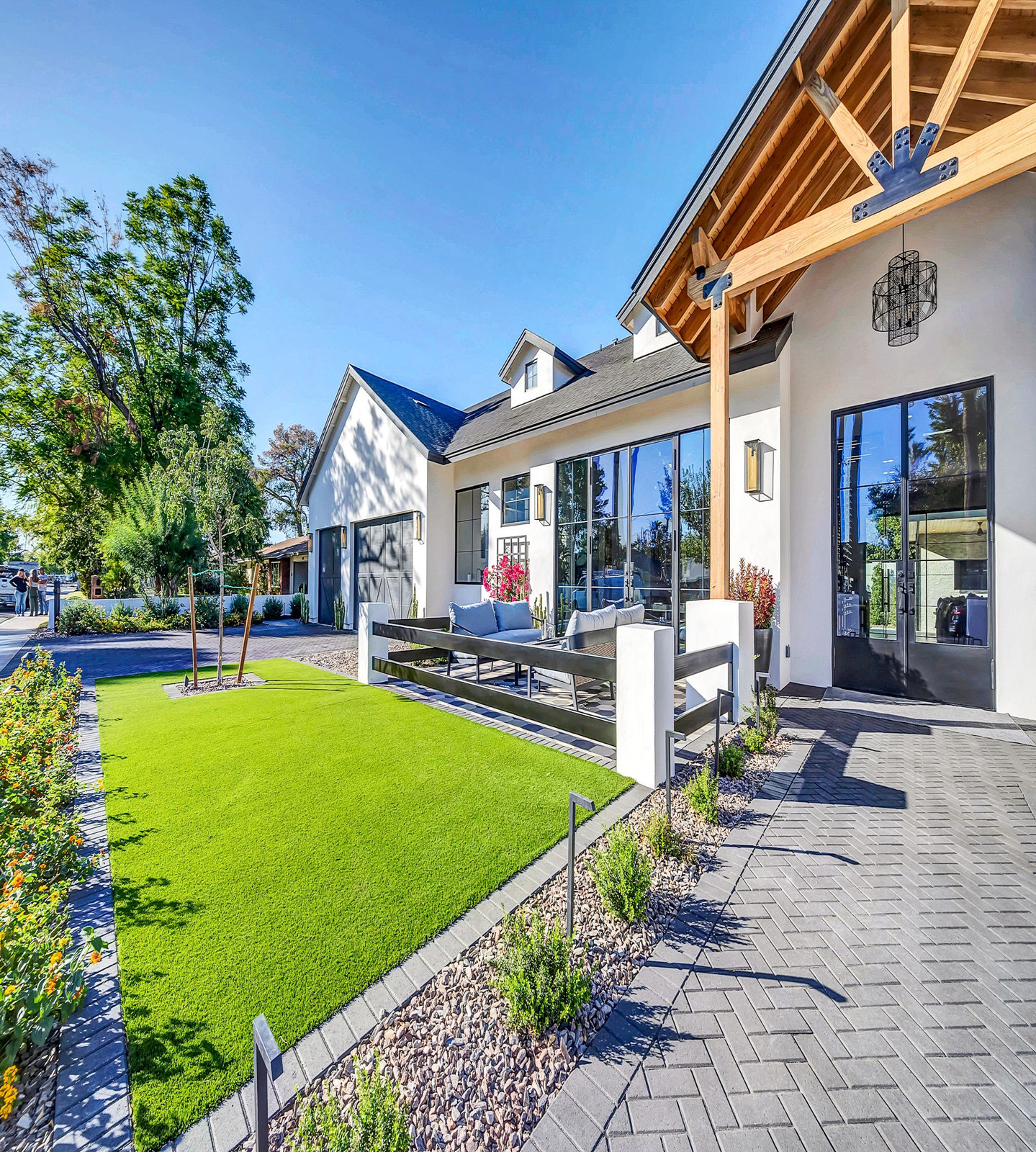
30-45 Photos: The Sweet Spot
This is where listing engagement peaks. Buyers scroll the full gallery, save the listing, and request showings at the highest rate. The home gets a complete visual story — every room, multiple angles in primary spaces, detail shots, exterior coverage from multiple sides, and outdoor amenities.
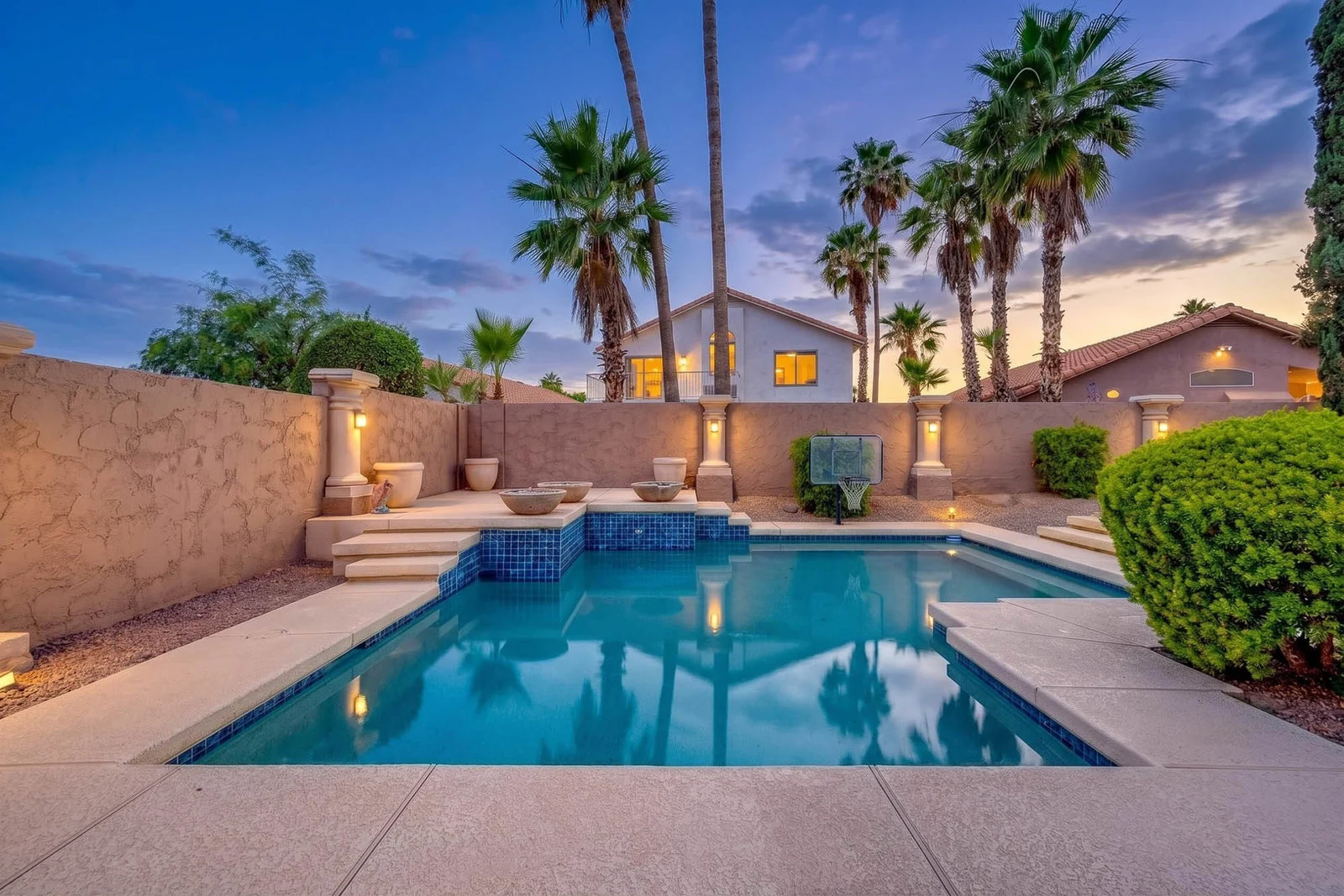
Most Phoenix-area listings live happily in this range. A 2,800 sq ft single-family home with a backyard pool typically wants 35-42 photos to tell the full story without padding.
45+ Photos: Diminishing Returns (Usually)
Above 45 photos, buyer attention starts to flatten and then drop. They're scrolling past detail shots and starting to skim. The exception is large luxury listings — a 6,000 sq ft estate with multiple living spaces, a guest casita, and substantial outdoor amenities legitimately needs 60-80 photos to be told well.
If you're publishing 60+ photos on a standard 1,800 sq ft home, you're probably hurting engagement. Edit ruthlessly.
Why Quality Beats Quantity
Forty bad photos perform worse than twenty-five great ones. Buyers don't count — they react. A gallery that opens with three weak exterior shots loses attention before the kitchen photo even loads. A gallery that opens with a stunning twilight hero followed by a cinematic interior wide-angle pulls buyers in deep.
Order matters as much as count. The first five photos in any listing gallery do most of the work.
How to Think About the Shot List
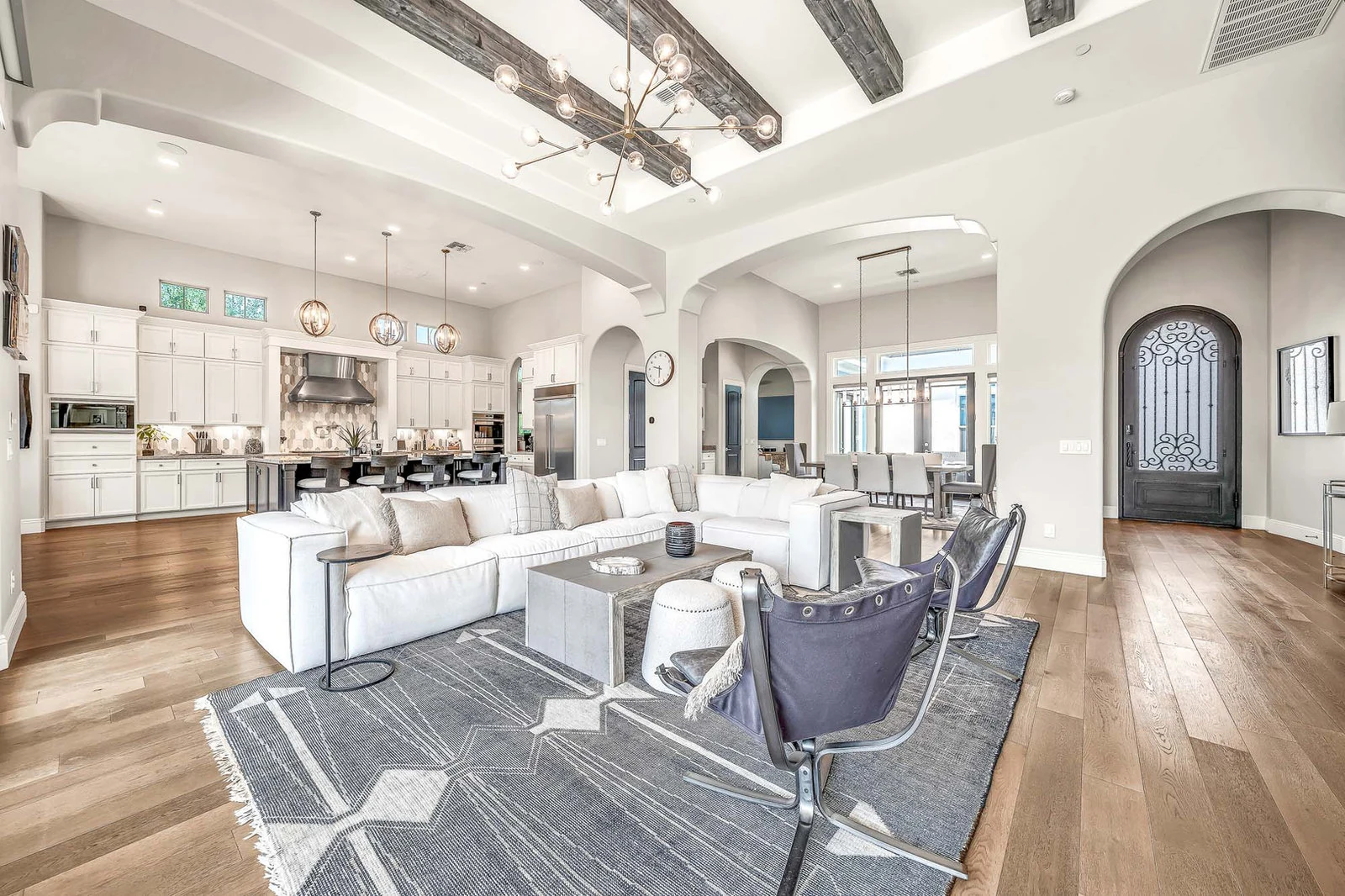
Every major room gets one wide-angle that establishes the space, plus one detail shot if the room has a feature worth highlighting. Primary suite and kitchen often warrant 3-4 photos each because buyers spend the most time studying them.
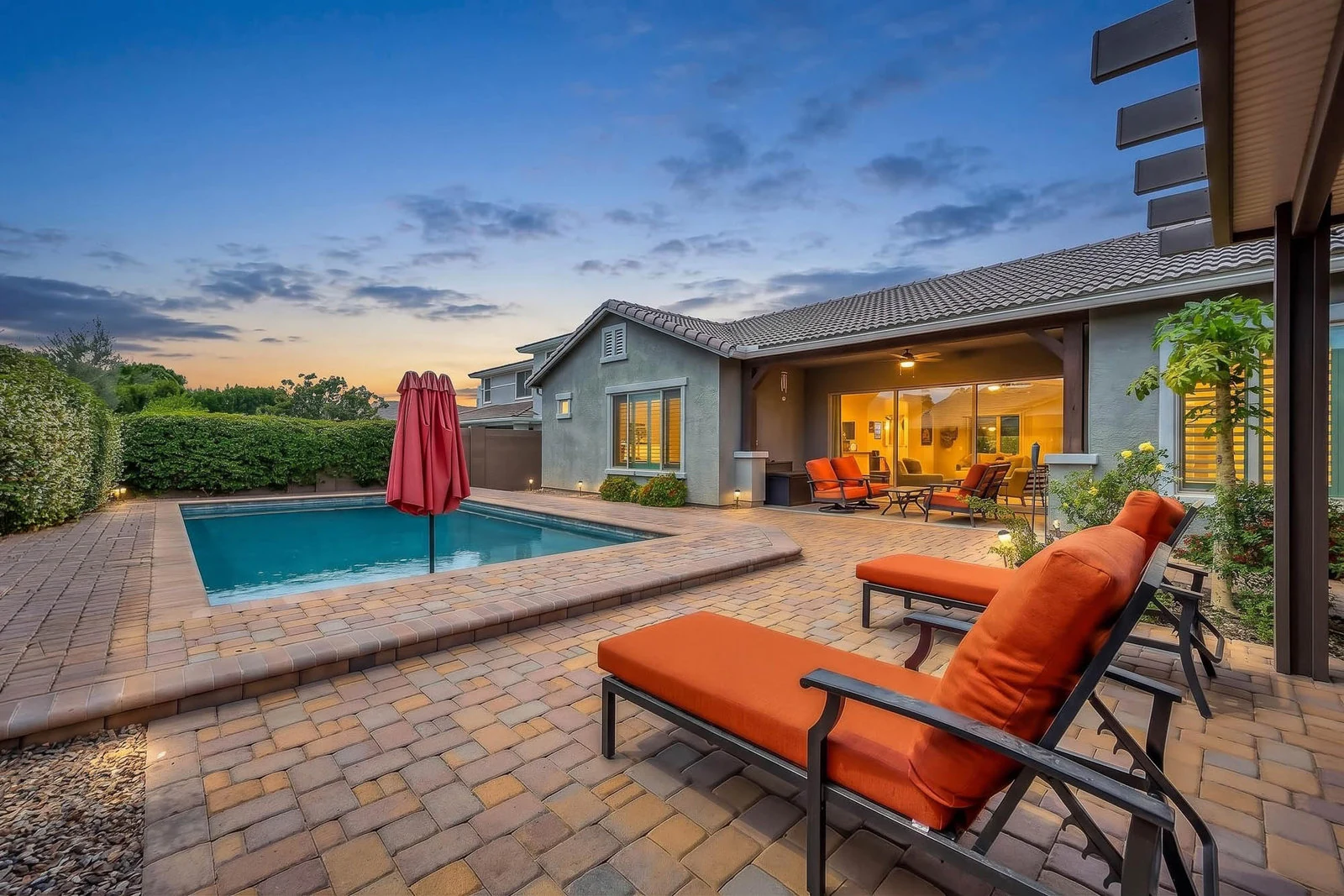
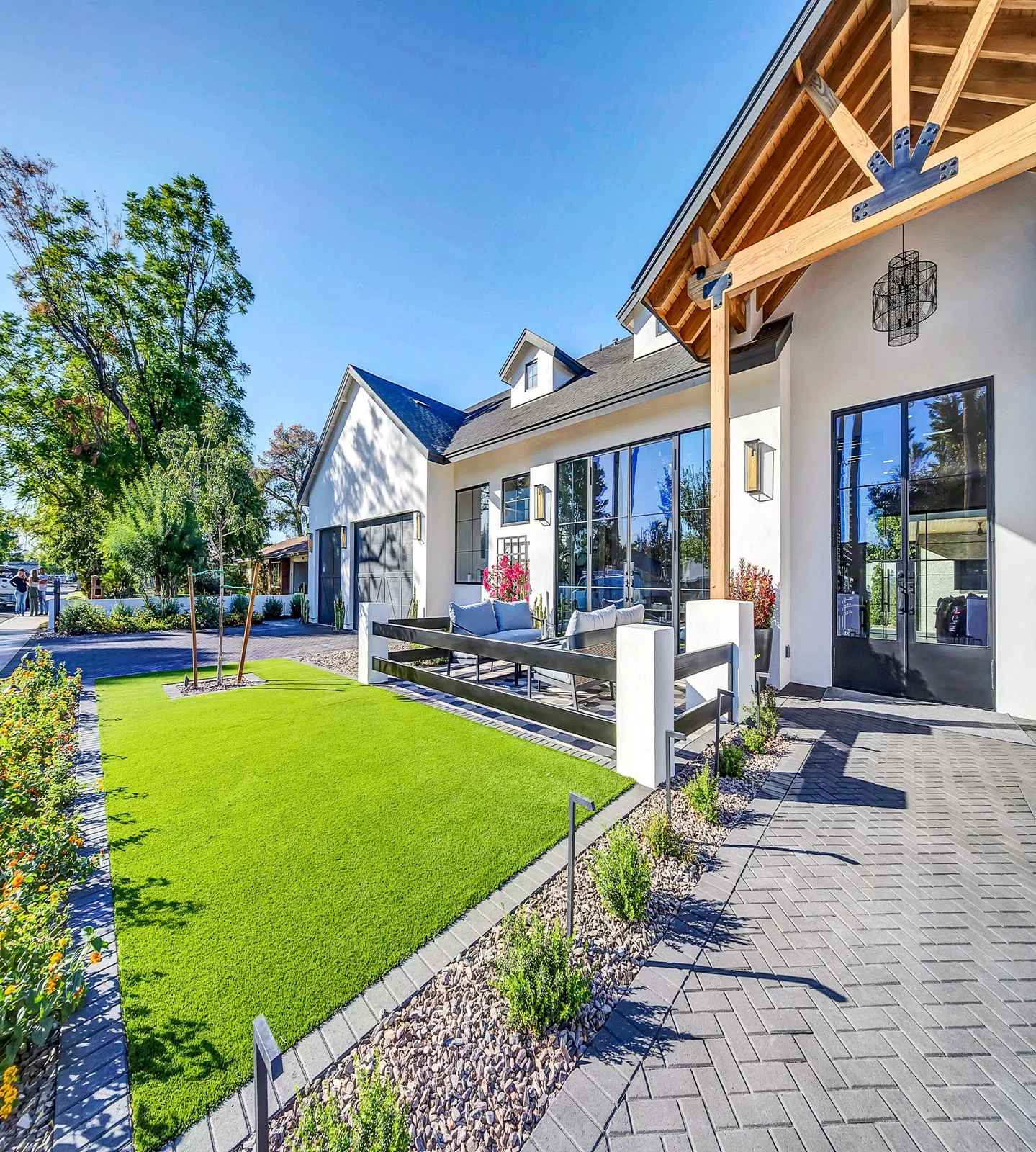
Every exterior angle (front, two sides, rear) gets a clean wide. Outdoor amenities (pool, ramada, RV gate, mountain views) each get at least one feature shot. Then add 2-4 aerial drone shots for community context, and 2-3 twilight hero shots if the home warrants it.
For a typical Phoenix-area 2,500 sq ft home, that math adds up to 35-42 photos naturally. No padding required.
The Bottom Line for Phoenix Agents
Aim for 30-45 photos on most listings. Cap at 40 unless the home is large or unusually feature-rich. Edit aggressively — every photo should earn its place in the gallery. And remember that the first five photos do disproportionate work, so spend extra attention there.
Learn more about our photography service.